

Many organisations don’t consider the impact of behavioural safety and the impact that worker habits and behaviours have on safe and effective production. They invest in safety systems via guarding machinery, improving environments, and training their workforce. Yet accidents, near misses and unsafe acts continue to occur. For senior leaders, this raises an important question: having spent so much time and resource on risk management, why are accidents still happening?
The answer often lies not in further procedures, but in day‑to‑day behaviours. Behavioural safety focuses on how people actually work, not just how work is designed on paper. It recognises that unconscious habits, shortcuts and cultural norms can undermine even the most robust safety management system.
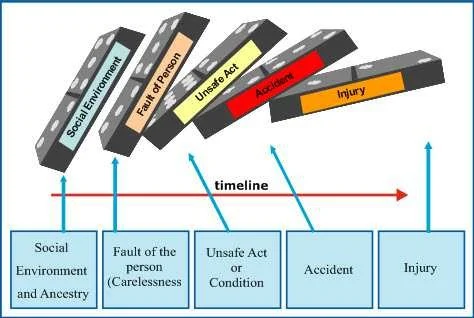
Decades of research, dating back to Heinrich’s early work in the 1930s, demonstrates that behaviours play a critical role in the chain of events that lead to incidents. Today, behavioural safety provides leaders with a practical, evidence‑based way to break that chain — by influencing habits, reinforcing safe actions and aligning leadership behaviour with organisational expectations.
For senior managers, behavioural safety is not an alternative to traditional safety management; it is the next step. When embedded effectively, it improves safety performance, strengthens leadership credibility, and delivers measurable reductions in incidents — while reinforcing a culture where people take personal ownership of safety every day.
Why should Senior Leaders should consider behavioural safety?
Senior leaders play a decisive role in shaping how safely people actually work. While most organisations have robust policies, risk assessments and training in place, incidents often persist because the way work is really done does not always align with those expectations. The HSE is clear: effective safety leadership requires visible commitment, worker engagement and a strong safety culture — not just written procedures.
Behavioural safety provides leaders with a practical way to deliver this intent by focusing on everyday behaviours, reinforcing the standards leaders expect, and closing the gap between policy and practice. When executives lead by example, actively engage their workforce and consistently challenge unsafe behaviours, safety performance improves; this is not because rules have changed, but because behaviours have.
Objectives of Behavioural Safety
The major objective of an effective behaviour-based safety process is to make safe behaviour a habit. The majority of what we do in a typical day is completed on automatic pilot or by ingrained habits. So why don’t we use this powerful driver to change our working habits to make them safer?
Unsafe behaviour is habitual in most teams. They have done something the wrong way for so long that they are not conscious of the behaviour or of its potential consequences. We often hear phrases such as “We’ve always done it like this” or “I’ve don’t this job for 30 years – why change it now”, and whilst that may true, does it automatically mean that it is inherently safe?
Why is Behavioural Safety Important?
The major objective of behaviour-based safety is to replace the unconscious unsafe behaviour that has come from months / years of unchallenged behaviours with unconscious, or automatic, safe behaviour, ie safe habits. Whilst this sounds easy, people are creatures of habit and it often takes longer to “unlearn and relearn” than it does to learn something initially. The HSE has some helpful tips on this topic which should be read in conjunction with this article.
Behavioural Safety in Practice: a Real-world workplace example
This can be demonstrated in a simple example we encountered. Lift truck drivers habitually drove along a pavement area in front of their factory to get into the goods-in area because it was blocked by delivery vans. People were working in close proximity to these vehicles and were used to lift trucks narrowly missing them, until one day someone stepped backwards when the lift truck was passing and was struck by the truck.
After identifying root causes via accident investigation, we supported our client with preventive and protective measures, using a combination of design improvements, engineering improvements and behavioural-based safety initiatives. We achieved this by:
- Engaging with the workforce to find out why they did this, and dangers they perceived
- Showed them evidence of near misses where people narrowly escaped being hit by a lift truck or other vehicle
- Remarked the defined walkways, rerouted the vehicle pathways and painted no driving / parking markers on the floor
- Installed barriers to prevent lift trucks entering specific areas where workers needed to stand to work
- Showed via video footage the workers what was happening, and achieved engagement and understanding by involving them. They were able to see the danger and how it could be easily prevented without causing them too much inconvenience (most had never thought about doing things any differently – it had always been done that way!)
- Provided briefings, toolbox talks, posters etc to promote the message that walkways must be always used
- Led by example by managers always using the paths
- Introduced observation studies whereby everyone took a turn at watching at key times throughout the day (5 -10 minutes at a time) and reporting back how many people were seen using the walkways and how many were not cooperating
- Fed back to all teams the results, rewarding the successes whilst following up on the persistent non-conformers
Within a month of actively following this process, there were almost zero incidents where people were seen working or passing close to moving vehicles.
Behavioural Safety Process – The starting point
Whilst it is essential that staff at ground level have full involvement in a behavioural safety strategy, it must start at the top. Without senior management buy-in the initiative will quickly fall down or be overtaken by other business priorities. Workers will pick up both the verbal and non-verbal cues and priorities of their leaders. If a manager’s non-verbal behaviours do not mirror the verbal messages, then confusion arises. Workers will either decide what they think their manager really wants (which may be different to what they say), or they will copy what their manager actually does.
A senior manager can give good rhetoric about safety behaviours needing to change and even to specify the behaviours they want to change. But unless the senior managers actively do this themselves, the whole strategy will fail.
7 Steps to Behavioural Safety
1. Define what your business means by behavioural safety and what it wants to achieve by implementing a safety behaviour strategy. Link this to your vision and values and consider how it can be incorporated with other business initiatives. Unless senior leaders are clear what they want and what behaviours they want to change, the strategy will quickly fail.
2. Identify the key behaviours you want to address. Review your accident and near miss reports or simply walk around your workplace and watch what people do or don’t do. Start with a few key behaviours and embed these first – it’s not what you start that counts, but what you finish!
3. Develop a communications plan involving HR, Learning & Development personnel (or other relevant departments) so there is universal understanding and buy-in to the process. Ensure communication uses simple language to explain:
• What you want to achieve.
• The key behaviours that you wish to change/improve.
• Why this is being introduced i.e. the benefits to the employees and managers,
• Initiatives to achieve these objectives and everyone’s contribution in meeting these.
• Everyone’s contribution or role in making the changes and making them stick.
4. Introduce a combination of initiatives to promote the change. Examples include:
• Observation studies where everyone takes turns in watching other teams/colleagues to identify how often the safe behaviour is followed or breached. This is easy to implement and with little or no cost. There are several other benefits which are too detailed to write about here, but you can contact us if you would like to talk through in more detail.
• Regular inspections – these are more formal checks of workplace activities and conditions, and should include the behaviours you want to change.
• Regular bite size training sessions (at the worksite) to remind staff of their contribution to the change process, include progress made in these sessions. Some organisations call these tool-box talks.
• Rewards and positive reinforcement for those individuals and teams who respond well and show improvement. Healthy competition / league tables also help to reinforce the message as no one likes to be last; this type of reward costs nothing more than time to display.
• Inclusion of behaviours when completing risk assessment templates.
5. Define key methods to monitor and measure improvements. These may include a variety of methods such as reduction in accident/damage incidents, as well as results of observation studies / inspection and other checks that are implemented as part of the improvement programme. If targets for improvement are set at the outset it provides a framework by which you can monitor and track your progress.
6. Provide regular feedback. This will include focus on positive behaviours and potentially reward for those individuals or teams who have shown the most changed behaviours. Positive reinforcement highlights your commitment to improvement and helps to reward your teams and increase motivation to continue working on changing long-lived habits. Recognition is often the simplest and most effective reward. For those individuals/teams who are persistently non-cooperative there will need to be additional measures (further communication, training, involvement and even discipline) to ensure the message is clear, understood by all, not a temporary “trend” and the organisation actually means it! A ying-yang approach so your teams know the boundaries you have set.
7. Adapt, modify without losing your consistency. As new initiatives develop there will undoubtedly be the need to tweak your initial ideas, based upon the results, feedback and management/team initiatives for different ways of doing things. Getting buy-in from your teams is essential if you want to achieve engagement as often the best ideas come from the proverbial “shop floor”. After all, they are the experts at what they do as they do it day in, day out. Don’t see changing or modifying a procedure as a failure. Positive action and positive intention aids positive outcomes and if this approach is taken then people will slowly learn to trust that doing something different isn’t because you were failing in the first place.
Building Capability to Drive Behavioural Safety
Training your teams, starting from senior leadership behavioural safety behaviour training, all the way through to front line staff will be a key ingredient for success. The leaders will set the tone, direction and strategy and link this with their marketing, communications and other strategic disciplines. The training should equip them with the knowledge and skills to understand and implement the business case for behavioural safety. This will include insight into the key processes needed and the benefits it can bring.
They will need to appreciate the time and resource commitment as well as their own emotional and behavioural commitment to make it a success.
To read a case study where we have supported an organisation through this process successfully, click here. Conversely, read this recent prosecution where a worker was killed by poor safety behaviours that had been left unchecked, and an over-reliance on signage rather than using safety controls that do not rely on humans. It is always better to design out risk as much as possible, as it is well known that human behaviour can be unreliable, especially when under pressure or when not being closely supervised.
Behaviour-based Safety – Final Thoughts
Behavioural safety does not happen by chance. It is shaped, reinforced and sustained by consistent and strong leadership. For organisations looking to move beyond policies and procedures and achieve lasting improvements in safety performance, empowering senior leaders is essential.
If you would like to explore how a structured, practical behavioural safety approach could support your leadership team, strengthen your safety culture and reduce incidents, we would welcome the opportunity to talk. To discuss how we can support your organisation, please get in touch with our team.


